Public Programming
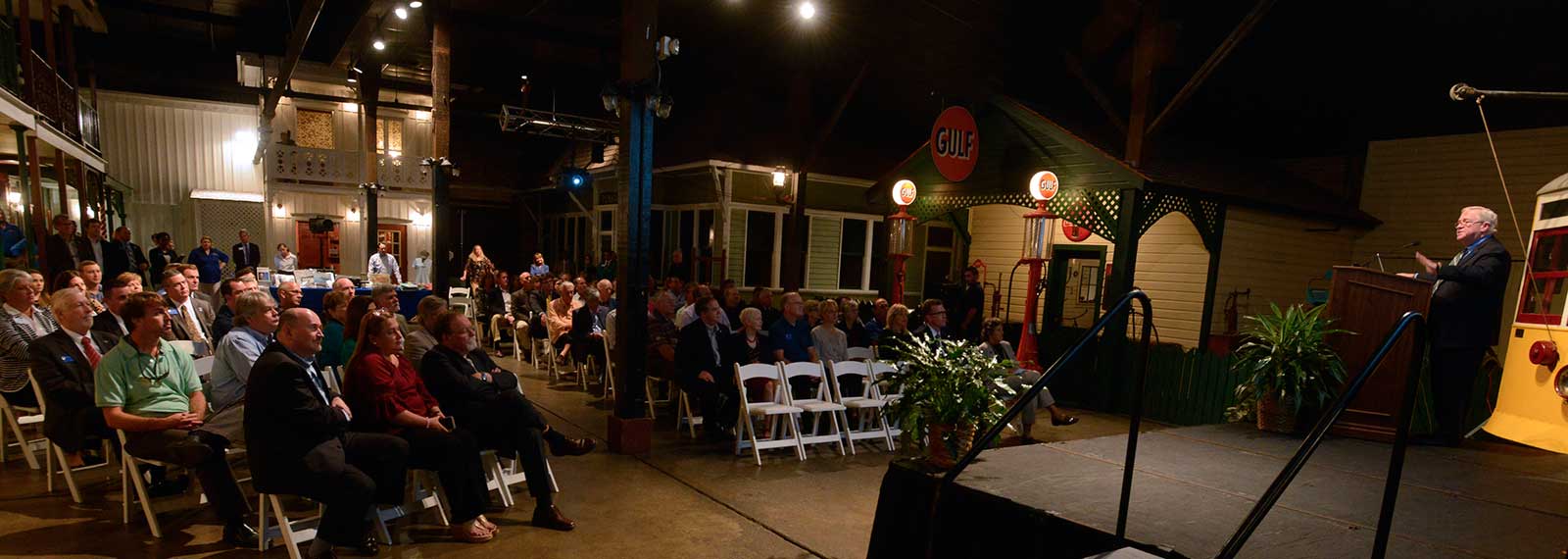
The UWF Historic Trust Education Department offers a wide variety of programming to educate and serve the public. We offer public presentations on a myriad of topics related to west Florida history, interpret several historical periods, provide themed tours daily, and educators offer outreach presentations at your location upon request and dependent on availability. Please see our YouTube channel for recordings of our Table Talks at the Trust presentations.
1776 Sampler
This project invites you to explore that world through the lives of 1,776 individuals known to have been in West Florida during the British period and American Revolution. Each name represents a real person who experienced this moment in history from a distinct perspective.
As part of the America 250 commemoration, you can choose one of these individuals and submit your own selfie to stand in for them—creating a modern, community-driven gallery that reflects the diversity of both 1776 and today. By doing so, you help restore presence to people who might otherwise remain only names on a page.
Submit Your Image and join the America 1776 Sampler.
Sweet Tea Murders LIVE: An Evening of Pensacola Crime Stories
"In the South, the tea is sweet...but the stories are murder."
Join former Homicide Detective Michael Earl Simmons and the UWF Historic Trust for an evening of true crime stories and sweet tea.
Tickets include complimentary Sweet Tea Murders mason jar of southern sweet tea. These are adult only evenings.
Tickets are $35. Members are $30 with discount code: VILLAR1926
- May 28: Featured Stories include The Murder of Captain Martin Villar and The 1926 Axe Murder on Chipley Alley
- June 25
- July 23
- August 27
- September 10
- November 12
Table Talks at the Trust
Join us for a monthly lunch and learn series during the Fall and Winter. The program is free-just bring your lunch and enjoy a casual opportunity to learn about a variety of topics! Held the third Wednesday of the from Noon to 1:00 at the Voices of Pensacola, 117 E. Government Street from January to June.
- May 20: Donna Waters, Historic Pensacola Village Living History Volunteer
- June 17: Monica Tapper, Historian, Historic Foodways
Escambia County History Fair
Holliday and Mary Veal History Fair Award
Jim Veal established the Holliday and Mary Veal History Fair Award to honor his parents' contributions to Pensacola history and to encourage future generations of history lovers. The goal of the award is to promote and encourage students' interest in history; help students become aware of the rich historical heritage of Pensacola and Northwest Florida; and, to introduce students to the resources available at the Pensacola Historical Society, now a part of the UWF Historic Trust.
2026 Revolution, Reaction, Reform in History
Congratulations to our 2026 Holliday and Mary Veal History Fair Award Winners!
Elementary Individual Exhibit
Daniel "Chappie" James
- Paul Lewis
Junior Group Exhibit
A Mark of Honor: The Revolutionary Courage of Jonathan Walker
- Kali Audiffred
- Daisy Blum
- Kayla Wroblewski
- Sienna Wilkerson
Senior Group Exhibit
Streetcar Strike of 1908
- Peyton Chester
- Lucy Mitchem
Florida's Territorial Bicentennial Documentary
When Floridans Became Americans
July 17, 1821 was the date when Spain transferred Florida to the United States at a formal ceremony in Pensacola, creating the counties of Escambia and St. John's. Two hundred years later, the city, county and state governments empowered a local commission to commemorate the territorial bicentennial, but early plans were derailed by the global pandemic. This is the story of how a community overcame obstacles to create a people's celebration of history — one that looked beyond the "great men" and centered the diverse population of 1821.