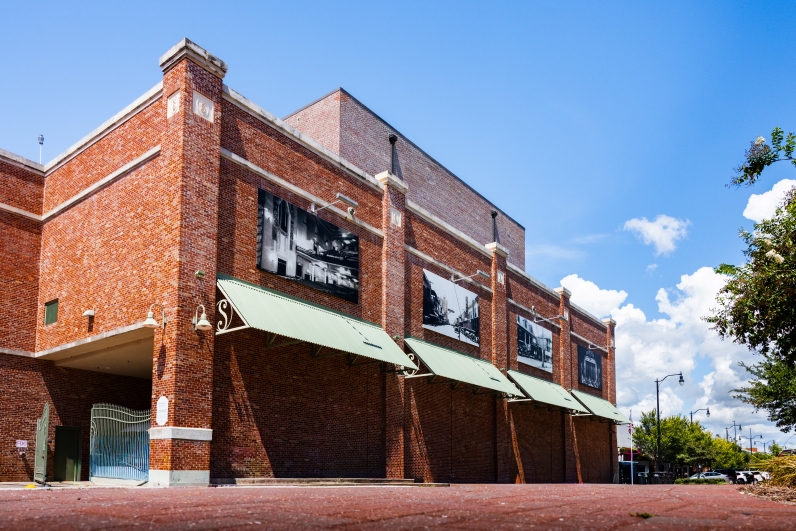
Mural: Saenger Theatre
Building: Saenger Theatre (Jefferson Street facade)
Address: 118 S Palafox St
Pensacola's Saenger Theatre is a cornerstone in downtown entertainment. Opening in 1925, the theatre featured Broadway productions and Vaudeville performers. With popular demand for cinemascope movies in the 1940s, the Saenger offered daily movie viewings alongside their performance schedule. In addition to movies and plays, broadcasted newsreels gave updates to the community during World War II.
The growth of mall culture in the 1970s slowed business, with the Saenger closing in 1975. Facing demolition, concerned residents - known today as Friends of the Saenger - advocated to place it on the National Register of Historic Places. Working with city officials and the University of West Florida, the group raised over a million dollars for restoration. In 1981, the Saenger had its grand re-opening, featuring a performance by The Duke Ellington Orchestra.
Today, the Saenger Theatre is a premier performing arts venue, offering over 130 shows annually. Hosting both local and world-class talents, the theatre features local groups like The Pensacola Children’s Chorus and Pensacola Opera, along with internationally-recognized performers like Robin Williams and Ziggy Marley.
About the Mural
The Saenger has seen it all, from vaudeville and Broadway to movies and wartime newsreels. Each image that comprises the four-piece mural offers a glimpse into the stories behind one of Pensacola’s most beloved landmarks.
(From left to right...)
Opening Night (1925)
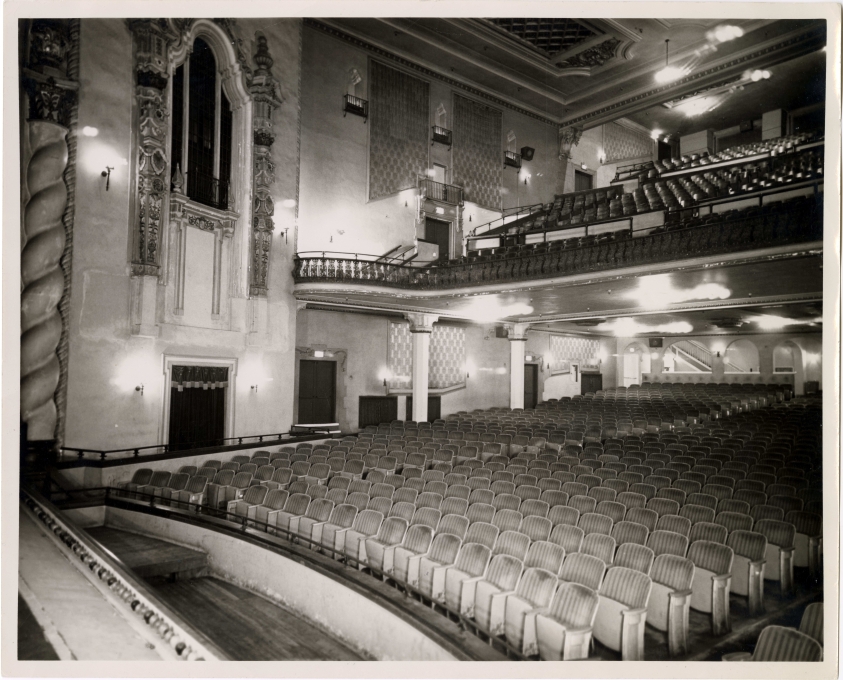
Interior of the Saenger Theatre on opening night. Influenced by Spanish Renaissance-style architecture, the theatre incorporated ornate metallurgy, sculpturework, and motifs. Even with an original seating capacity of 1,802, the Saenger often sold-out shows and relied on nearby theatres like the Isis Theatre for extra seating. Image taken from stage-view of Saenger Theatre, circa. 1925, and provided by the UWF Historic Trust.
Palafox Street (1930s)
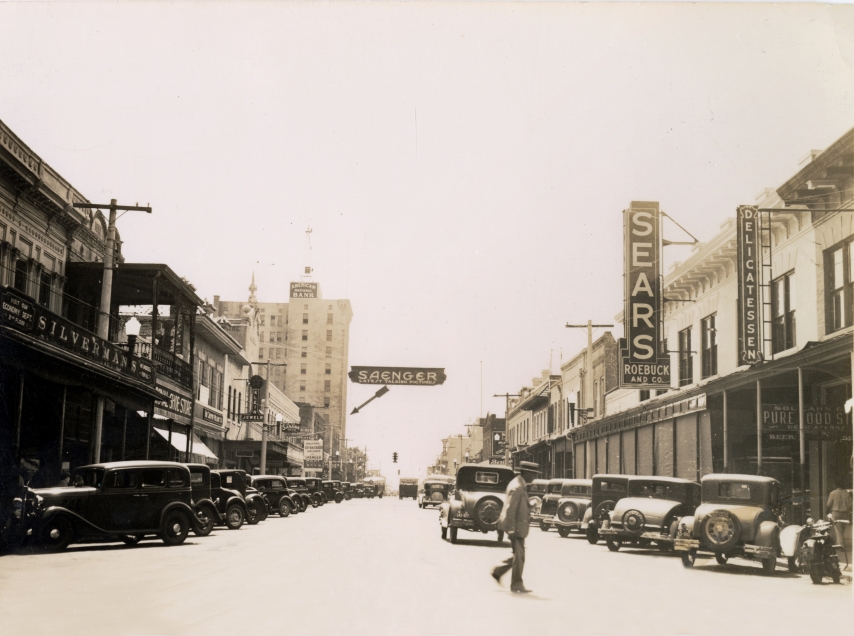
A line of automobiles parked outside the front entrance of Saenger Theatre. Note the Art Deco-style signage, which advertises the “latest talking pictures” being shown. Image taken from northview of Palafox Street, circa. 1930s, and provided by the UWF Historic Trust.
Construction (1922)
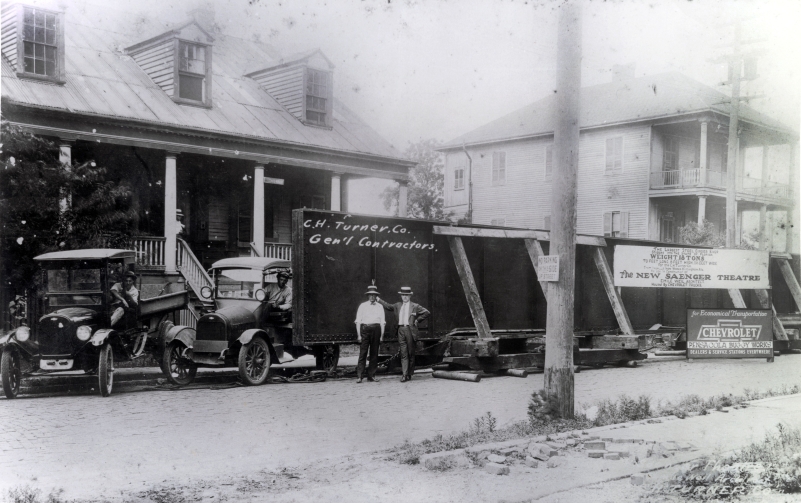
Construction of the Saenger Theatre, designed by architect Emile Weil and constructed for $500,000. Parts of the old Pensacola Opera House were repurposed for the Saenger, such as the metal balcony railings. Image taken from downtown Pensacola, circa. 1922, and provided by the UWF Historic Trust
The Stage (1933)
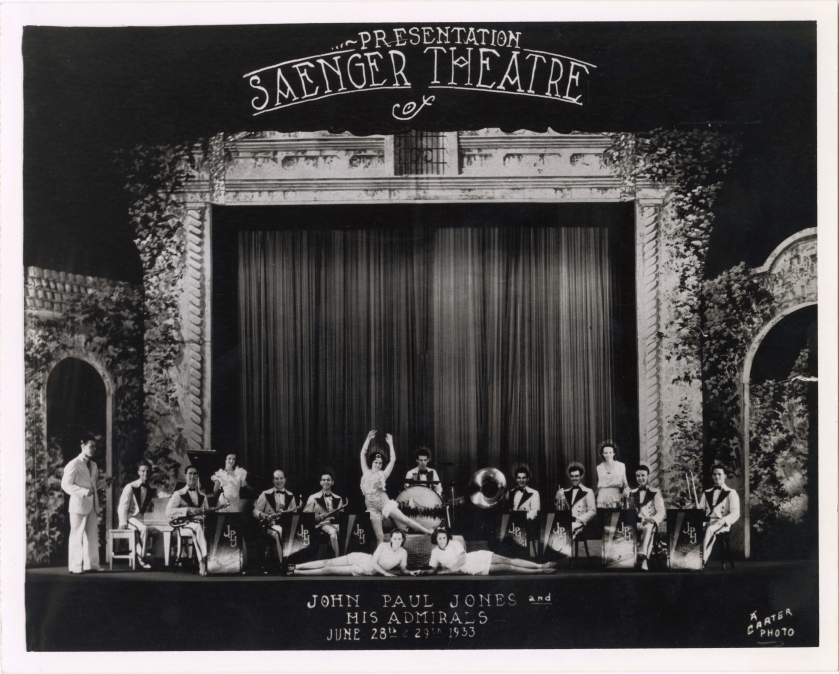
Performance of John Paul Jones and His Admirals, presented by the Saenger Theatre. Image taken from audience-view of stage, June 28, 1933, and provided by the UWF Historic Trust
Sources
- Opening (1925): Part of chain of Southeastern Theatres, Nicknamed “Grand Dame of Palafox”, Originally for Vaudeville and Silent Movies
- Mid-Century Popularity (1940s-1960s): Travelling Performers, Entertainment for locals, Provided information for WWII (connection to NAS)
- Disrepair (1970-1975): Mall Culture, Abandonment
- Restoration Efforts (1975-1980): Friends of Saenger, UWF involvement, City of Pensacola Involvement, Department of the Interior
- Re-Opening to Current (1980s - current): Duke Ellington Orchestra Features, 100,000 annual guests, 130 annual shows, Nationally-recognized, Local organizations [Pensacola Children’s Choir, Pensacola Opera], World-class performers [Robin Williams, Ziggly Marley]